
An Aviation Maintenance Reflection 25 Years After September 11
When Readiness Became Real
Twenty-five years ago, America watched its skies change in a matter of hours. Commercial aircraft were ordered to the ground. Airports closed. Airspace emptied. Military fighters took to the air. Across the country, there was an unsettling question no one could answer with certainty: Was another attack coming?
In the hours and days that followed, military aviation moved onto a footing few Americans had ever witnessed over their own country. Fighters and Bombers flew combat air patrols over American cities. Tankers remained airborne to give those aircraft the endurance to stay there. E-3 AWACS aircraft provided surveillance, coordination and command-and-control overhead. Within hours of the attacks, AWACS aircraft were patrolling North American airspace, beginning round-the-clock operations that would continue into the spring of 2002.
Every aircraft launched into that response created another requirement on the ground. Someone had to inspect it, fuel it, arm it, troubleshoot it and repair it. Someone had to document the work, recover the aircraft when it landed and prepare it to launch again. And because the response quickly became a sustained homeland-defense mission, those responsibilities could not be measured merely in hours.
At the 192nd Fighter Wing, maintenance and operations crews sustained 211 continuous days of Operation Noble Eagle duty and more than 3,580 flying hours without a single maintenance cancellation. At the 301st Fighter Wing in Texas, maintainers had F-16s configured and armed within an hour of receiving their homeland-defense tasking, and the wing transitioned into 24-hour operations.
At Tinker Air Force Base, maintainers supporting the 552nd Air Control Wing worked 12-hour shifts, seven days a week, turning E-3 AWACS aircraft back to flight in no more than four hours after they landed.
We naturally remember the aircraft in the sky and the pilots who flew them. Less visible were the thousands of aviation maintenance professionals whose work made those missions possible. Their contribution illustrates one of the enduring lessons September 11 holds for our profession:
· Readiness cannot be created after an emergency begins. It has to already exist.
For members of Novelty AIR’s leadership team, that lesson is not theoretical.
Keeping the Mission Flying
On September 11, Col. Randy McClure, USAF, a Senior Advisor to Novelty AIR, was serving in aviation maintenance leadership with the 927th Air Refueling Wing at Selfridge Air National Guard Base in Michigan. As fighters began flying continuous patrols to protect American airspace, another aircraft became essential to keeping them there: the aerial refueling tanker.
Those tankers needed to remain available around the clock, which meant the maintenance organization supporting them had to do the same. Randy remembers his operation transitioning into three teams working eight-hour shifts, 24 hours a day, day after day, to sustain the mission. The country was facing an uncertain threat, fighters needed to remain overhead, and the maintenance operation had to ensure that the aircraft supporting them were ready when called.
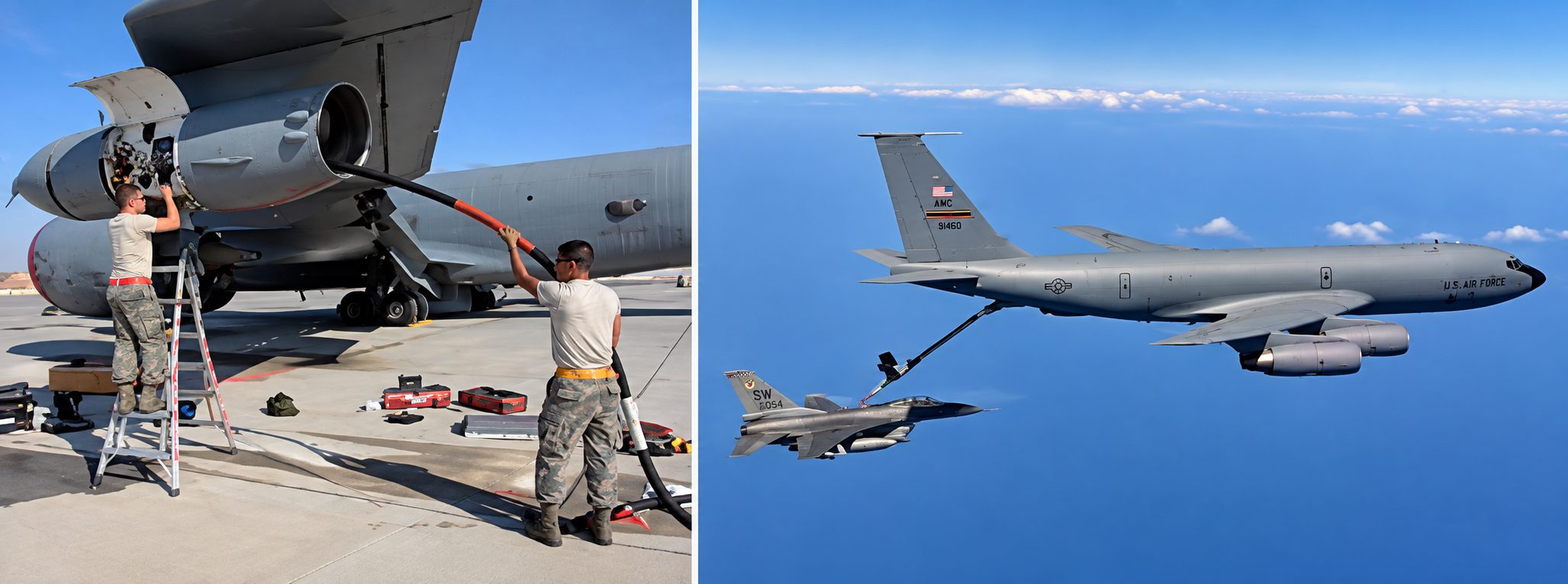
His experience at Selfridge was one part of an enormous national effort. By the end of 2001, Air Mobility Command's KC-135 and KC-10 tankers had flown 3,199 missions supporting Operation Noble Eagle and refueled 9,822 receiving aircraft. On the operation's busiest day that year, tankers flew 74 missions in a single 24-hour period.
Those numbers help put Randy's recollection of three eight-hour maintenance shifts into perspective. Keeping fighters overhead required fuel. Providing that fuel required tankers. And keeping those tankers available required maintainers. The chain of national readiness ultimately reached all the way back to the hangar floor.
What strikes me about Randy's story is how little a national emergency changes the fundamentals of aviation maintenance. Aircraft still develop discrepancies. Components still wear. Inspections still have to be completed. Technical procedures must still be followed, tools accounted for and maintenance accurately documented. Urgency does not lower those standards; it makes adherence to them even more important.
The country suddenly needed aircraft available around the clock, but the people responsible for providing them did not have the luxury of beginning their preparation on September 11. The knowledge, discipline, procedures, teamwork and professional judgment required to sustain that mission had been developed long before the crisis arrived, and could be relied on.
· They were ready because they had already been preparing to be ready.
A Newly Minted Aviation Maintenance Technician
For Dan Coleman, USCG, Novelty AIR’s COO and Chief Instructor, September 11 came at almost exactly the opposite point in his aviation maintenance career.
Dan joined the U.S. Coast Guard in September 1999 and completed his aviation maintenance training in August 2001. Only weeks later, America was attacked. He was stationed in San Francisco when the World Trade Center was hit, but he was already scheduled to transfer that same week to the Coast Guard's aviation station at Cape Cod. He arrived on the East Coast as a newly trained Aviation Maintenance Technician in a country whose aviation and national-security posture had changed almost overnight.
The timing is difficult to comprehend 25 years later. Dan had just completed the training intended to prepare him for the responsibilities of his profession. Almost immediately, those responsibilities became real.
In the months that followed, his station flew patrols around New York Harbor and along the Hudson River, including missions surveying the World Trade Center debris site from the air. More than two decades later, Dan still describes particular images that remain seared into his memory: smoke rising from Lower Manhattan, the Statue of Liberty below, and tugboats carrying debris from the World Trade Center site across the river for sorting and investigation.
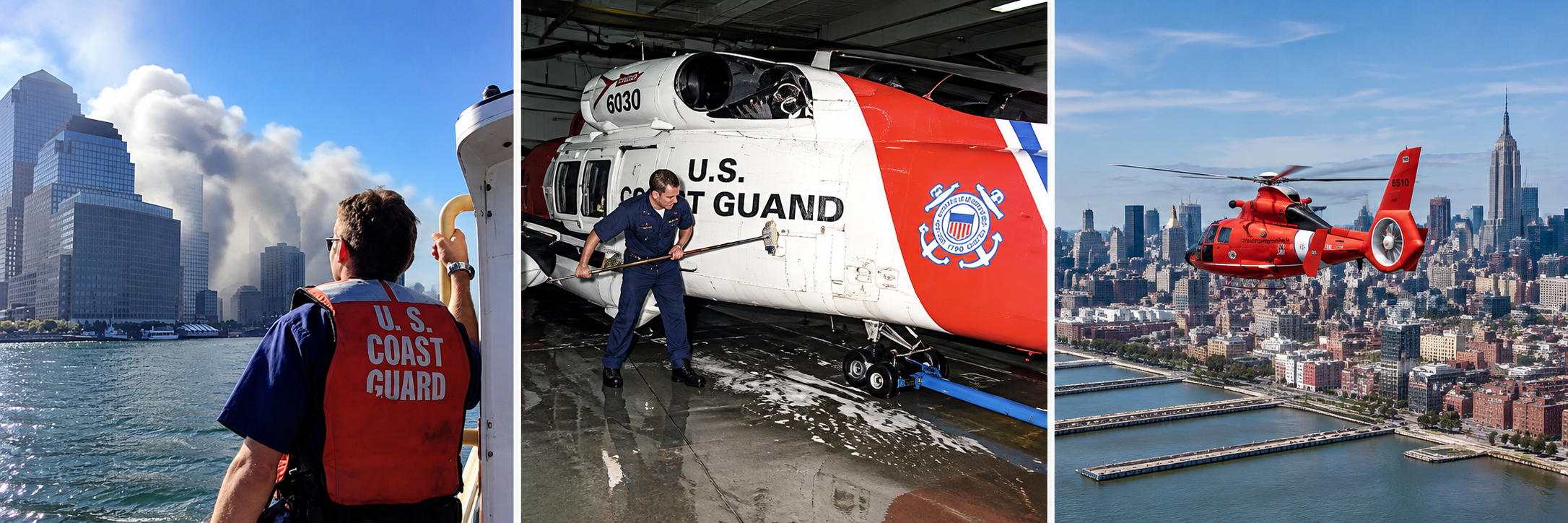
The missions did not end when the smoke disappeared. As the United States adapted to a new security environment, Dan participated in persistent aerial security patrols along the New York-Washington corridor, flying routes intended to provide presence, heightened vigilance and deterrence against another potential attack. What began as an immediate response became part of a much longer change in the Coast Guard's homeland-security mission.
For a young technician who had completed aviation maintenance training only weeks before September 11, concepts such as standards, systems, readiness and duty could no longer exist only in a textbook or classroom. There were aircraft that needed to fly, missions that needed to be performed and people depending upon those aircraft being available. And somewhere behind every aircraft was a maintainer expected to do his or her part correctly.
When an Aircraft Becomes a Capability
Randy and Dan's experiences point toward a broader distinction that is important not only to military aviation, but to the way we think about aviation maintenance itself.
When discussing military preparedness, we naturally count assets: fighters, tankers, helicopters, transports and surveillance aircraft. But possessing an aircraft and possessing an aviation capability are not the same thing.
· An aircraft sitting on a ramp is an asset. An aircraft that can be safely launched when the mission demands it is a capability. The difference between the two is readiness.
Creating that capability requires pilots and aircrews, fuel, logistics, command-and-control and countless supporting functions. But it also requires maintenance. An aircraft that cannot safely launch cannot perform the mission for which it was acquired, regardless of how advanced or expensive it may be.
The AWACS response after September 11 illustrates the point particularly well. The 552nd Air Control Wing had aircraft dispersed around the world when the attacks occurred. The immediate challenge included determining which aircraft were available and how quickly they could be put into the homeland-defense mission. Within hours, AWACS aircraft were overhead. Around-the-clock patrols continued for months, and by the following May U.S. AWACS had flown more than 590 Operation Noble Eagle missions totaling nearly 7,100 flying hours.
Fighters provided protection. Tankers gave them endurance. AWACS provided surveillance, coordination and command-and-control. Maintainers helped make all of them available. That is maintenance readiness becoming national readiness.
What Changed - and What Did Not
September 11 exposed weaknesses in America's preparedness and fundamentally reshaped aviation security. The Transportation Security Administration was created. The Federal Air Marshal program expanded dramatically. Cockpit security, passenger and baggage screening, airport access controls and many other elements of the aviation system changed. For those working around aircraft, controlling access to aircraft, ramps, facilities and sensitive areas became an increasingly visible part of aviation's broader safety and security culture.
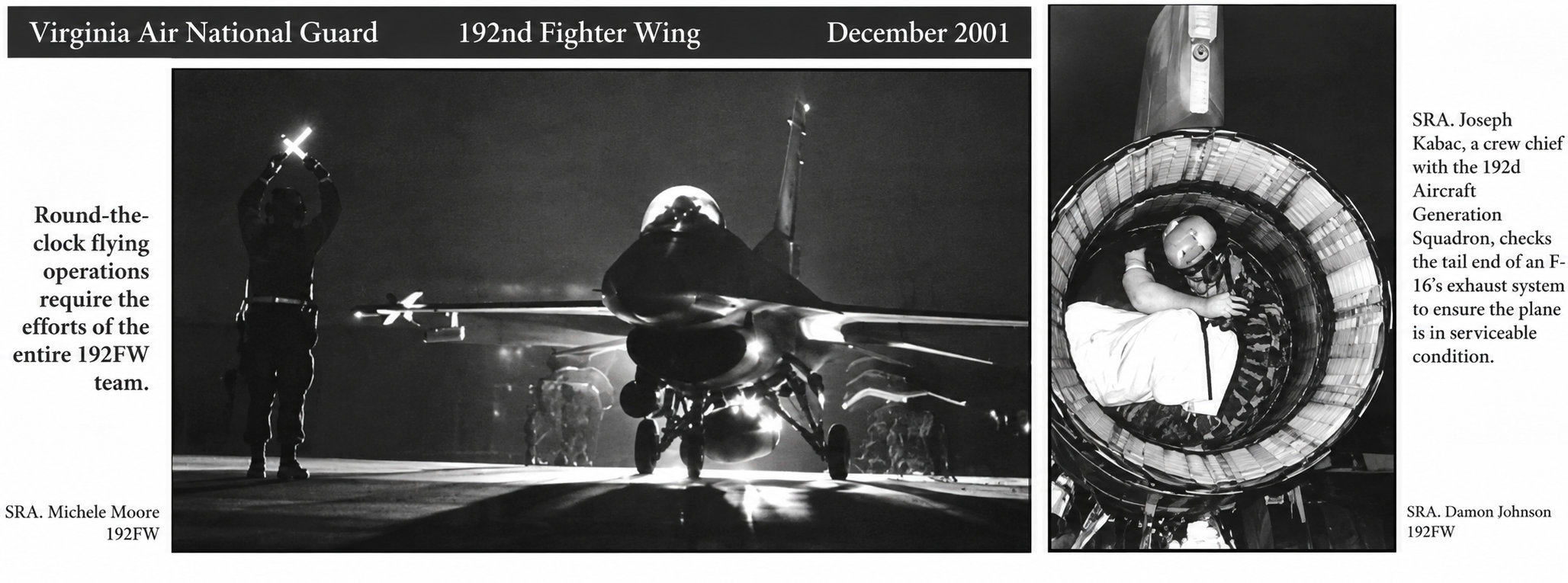
For military aviation professionals such as Randy and Dan, however, September 11 was not simply one terrible day followed by a return to normal. It changed what normal meant. Operations that began as an emergency response evolved into the sustained homeland-defense mission of Operation Noble Eagle. People and machines were required to perform continuously, not simply for hours or days, but for months and ultimately years.
Yet amid everything that changed, something fundamental did not. The standards required during extraordinary circumstances were the same professional standards that had to be practiced during ordinary ones.
The inspection completed correctly on an uneventful Tuesday mattered. The technician learning why a procedure existed mattered. The instructor refusing to accept a shortcut mattered. Accurate documentation mattered. Tool accountability mattered. Troubleshooting skill mattered. Pride in craftsmanship mattered.
September 11 did not suddenly make those things important. It revealed how important they had always been.
The Profession We Inherit
At Novelty AIR, we have tried to capture some of that responsibility in our Professional Declaration. It is not another technical standard; the FAA provides those. Rather, it is a statement about the kind of aviation maintenance professional we believe this industry needs and the professional character that must accompany technical competence.
That means taking pride in the craft, verifying rather than assuming, holding the line on safety because other people depend upon your work, accepting responsibility for what you do and looking out for the people beside you. It also means understanding that a career in aviation maintenance offers an opportunity to participate in something much larger than yourself.
That idea carries particular weight on this anniversary because Randy and Dan experienced September 11 from such different points in their careers. Randy was a maintenance leader responsible for organizing people and systems to keep critical aircraft flying around the clock. Dan had completed aviation maintenance training only weeks earlier and was about to discover, much sooner than he could have imagined, why that training mattered.
Different ranks. Different aircraft. Different responsibilities. But the same underlying obligation: someone was depending on them.
Pilots depended upon maintainers. Military units depended upon one another. Communities depended upon aircraft being overhead. And a frightened country depended upon thousands of men and women, most of whom it would never know by name, doing their jobs extraordinarily well.
That is part of the professional heritage today's aviation maintenance technicians inherit.
As an industry, we absolutely should modernize how we prepare them. We should embrace better learning methodologies, new technologies and stronger ways of connecting education with the aircraft, workplaces and employers technicians will ultimately serve. But as we modernize the way this profession is taught, we must be careful never to modernize away the character of the profession itself.
Aviation maintenance is craftsmanship and accountability. It is service. It is taking pride in work most passengers will never see and accepting responsibility for people you may never meet. At its best, it can also be a deeply purpose-driven career - a working life spent contributing to something larger than yourself.
· Do right. Every time.
Twenty-Five Years Later
Today, we honor the nearly 3,000 people whose lives were taken on September 11, 2001. We remember their families, the first responders and service members who answered the call, and the countless Americans whose lives were forever changed.
Within aviation maintenance, there is another lesson worth carrying forward. The moment when our preparation will matter most rarely announces itself in advance. That is why the ordinary days matter. The classroom matters. The instructor matters. The inspection matters. The technician who refuses to accept "good enough" matters. The experienced maintainer who passes knowledge to the next generation matters. And the pride someone takes in doing a job correctly when nobody is watching, matters.
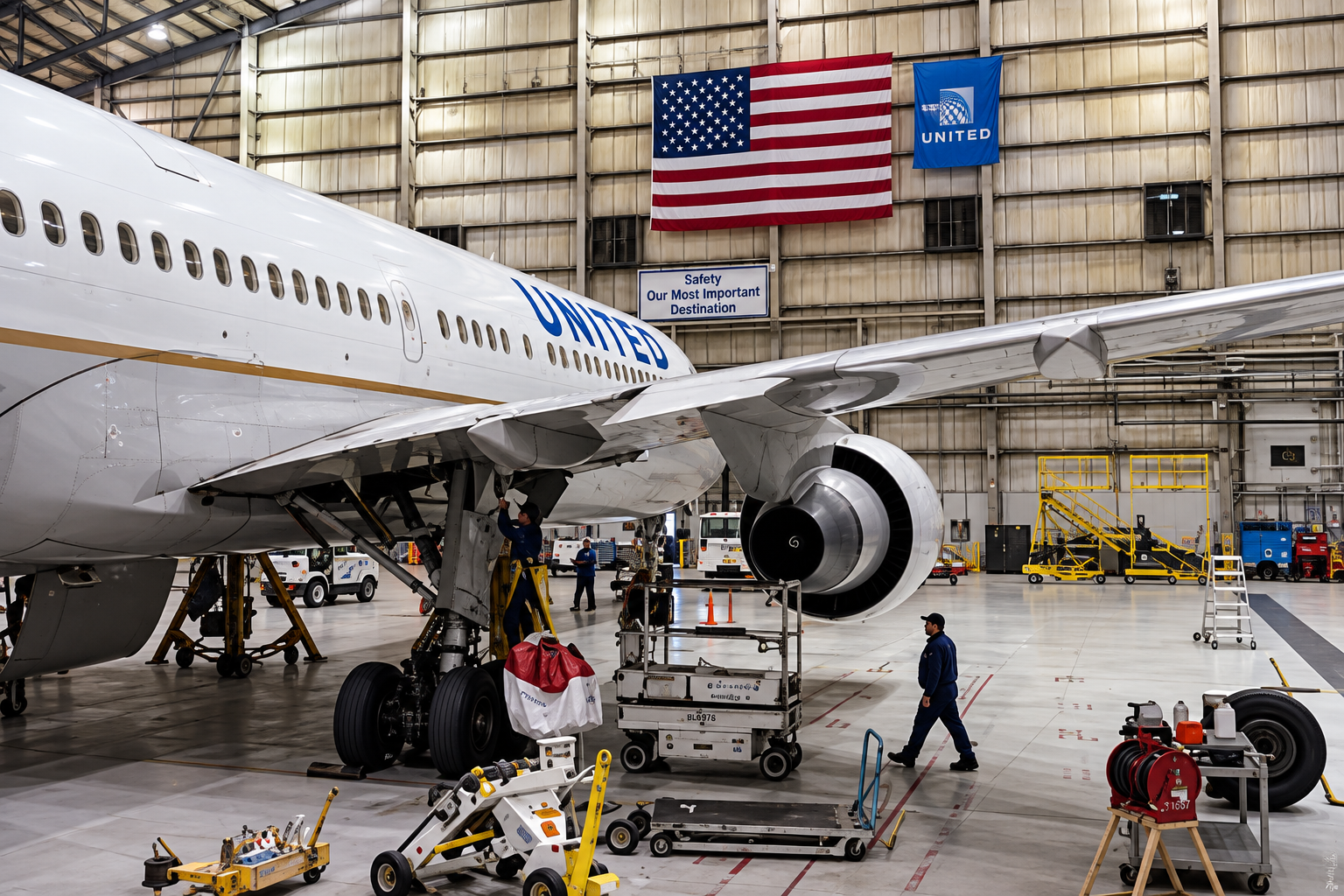
SAFETY: Our Most Important Destination
On September 11, 2001, America suddenly needed its aviation professionals to be ready. They answered because years of training, standards, experience and professional discipline existed before anyone knew how urgently they would be needed.
Twenty-five years later, we inherit both the profession they represented and the responsibility to prepare those who will answer whatever call comes next.
Our Professional Declaration at Novelty AIR ends with a simple promise:
· “You can count on us. You can depend on me.”
For those who served in aviation maintenance on September 11 and throughout the days, months and years that followed, words like those were not merely an aspiration. They were demonstrated through action.
May we honor that example by preparing the next generation to do the same.
Selected Historical Sources
U.S. Air Force - 552nd Air Control Wing history and Operation Noble Eagle: https://www.af.mil/About-Us/Fact-Sheets/Display/Article/2724227/552nd-air-control-wing/
Joint Base Langley-Eustis - 192nd Fighter Wing September 11 recollections: https://www.jble.af.mil/News/Features/Display/Article/260723/sept-11-where-were-you-stories-from-jble/
301st Fighter Wing - A Day Not Like Any Other: https://www.301fw.afrc.af.mil/News/Article-Display/Article/940242/a-day-not-like-any-other/
552nd Air Control Wing - Air War Over America: https://www.552acw.acc.af.mil/News/Article-Display/Article/659903/air-war-over-america-general-robinson-recalls-firsts-of-911/
Novelty AIR - Professional Declaration: https://www.noveltyair.com/professional-declaration
